 Save
Save My first brush with miso-glazed eggplant happened on a quiet Tuesday night when my neighbor brought over a container from a Japanese restaurant down the street. I bit into one silky half and the umami hit immediately—sweet, salty, almost alive on my tongue. That glaze clung to the tender flesh like a lacquer, and I spent the next twenty minutes eating them slowly, wondering how something so simple could taste this complete. I learned to make it myself out of pure obsession, and now it lives in my rotation as the dish I reach for when I want something elegant but not fussy.
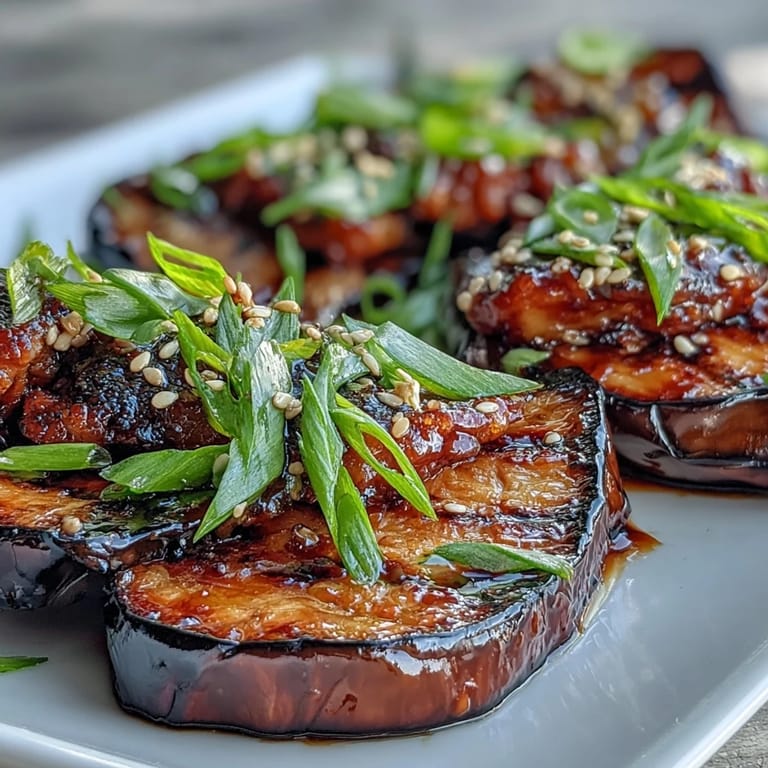
I made this for a dinner party last summer when my friend Sarah mentioned she'd gone vegetarian, and I wanted something that didn't feel like a concession. When those eggplant halves came out of the broiler, the glaze was bubbling and darkened at the edges, the kitchen filled with this toasted, caramel-like aroma. Everyone paused mid-conversation when they took their first bites, and that silent moment of approval meant more than any compliment could have.
Ingredients
- Japanese eggplants (2 medium): These are smaller and have thinner skin than globe eggplants, which means less bitterness and more tender flesh when roasted—they're the right choice here.
- White miso paste (3 tbsp): The gentler cousin to red miso, it brings sweetness and umami without overwhelming heat; look for it in the Asian section or order it online if your store doesn't carry it.
- Mirin (1 tbsp): This sweet rice wine adds depth and helps the glaze caramelize beautifully under the broiler—don't skip it.
- Sake (1 tbsp): A splash of rice wine lifts the glaze and prevents it from tasting one-dimensional; any cooking sake works fine.
- Sugar (1 tbsp): Balances the saltiness of the miso and encourages that gorgeous caramelization.
- Sesame oil (1 tbsp): Use the toasted kind for deeper flavor, and save a little to brush on the eggplant before roasting.
- Toasted sesame seeds (1 tbsp) and green onions (2, thinly sliced): These finish the dish with texture, color, and a fresh brightness that cuts through the richness of the glaze.
Tired of Takeout? 🥡
Get 10 meals you can make faster than delivery arrives. Seriously.
One email. No spam. Unsubscribe anytime.
Instructions
- Heat your oven and prepare the pan:
- Preheat to 400°F and line a baking sheet with parchment paper so cleanup becomes effortless and nothing sticks.
- Halve and score the eggplants:
- Slice each eggplant lengthwise, then use a sharp knife to score the flesh in a crosshatch pattern—this helps the heat penetrate evenly and creates little pockets where the glaze can settle in. Be careful not to cut through the skin, which holds everything together.
- Oil and roast:
- Brush the cut sides with sesame oil, place them cut-side up on the sheet, and roast for 20 to 25 minutes until the flesh is golden and tender when you press it lightly with a fork. The edges might brown—that's exactly what you want.
- Mix the glaze while eggplants roast:
- In a small bowl, whisk together the miso paste, mirin, sake, sugar, and remaining sesame oil until you have a smooth, slightly thick sauce. Taste it—it should taste boldly sweet and salty, almost intense, because it mellows when it hits the hot eggplant.
- Glaze and broil:
- Remove the eggplants from the oven, spread a generous layer of glaze over each cut side, then switch the oven to broil and return them for 2 to 3 minutes. Watch closely—the glaze will bubble and darken at the edges, and that caramelization is the whole point, but let it burn and the flavor turns bitter.
- Finish and serve:
- Pull them from the broiler, sprinkle with toasted sesame seeds and sliced green onions while they're still hot so everything sticks, and serve immediately while the eggplant is silky and the glaze is still slightly tacky.
 Save
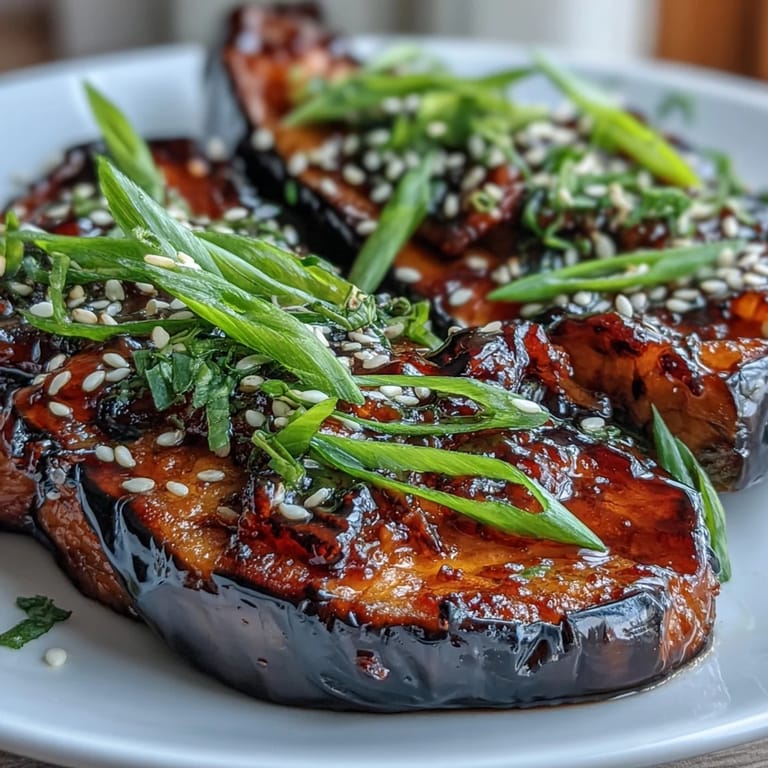
Save There was a moment during that dinner party when my dad, who claims he doesn't really like eggplant, asked for seconds and then thirds. He paired it with rice and ate it like it was the most straightforward, satisfying thing in the world—no drama, no pretense. That's when I realized this dish works because it doesn't try too hard; it just exists as something genuinely delicious.
Why the Broiler Step Matters
Most people would stop after roasting and call it done, but the broiler is where the magic happens. When the glaze hits that intense, direct heat, the sugars caramelize and the whole thing deepens in flavor—it becomes less sweet and more complex, almost smoky. Without that step, you've got a nice roasted eggplant with a glaze; with it, you've got something restaurant-quality that tastes like someone spent hours on it.
Pairing and Serving Ideas
Serve this alongside steamed jasmine rice to soak up any extra glaze, or nestle it into a grain bowl with pickled vegetables and tofu. It's equally at home as a solo side at a dinner party or as part of a larger Japanese-inspired spread with miso soup, cucumber salad, and grilled fish. Cold leftovers the next day are weirdly delicious too, though I rarely have any to test that theory.
Storage and Make-Ahead Tips
You can assemble this completely up to a few hours ahead—score and oil the eggplants, mix the glaze, and keep everything covered in the fridge until you're ready to roast. The glaze itself keeps in a sealed jar for up to two weeks, so if you fall in love with it, make a double batch and use it on grilled vegetables, tofu, or even chicken. Reheated eggplant loses a little of its silky texture, but the flavor remains bright and full.
- Mix the glaze up to three days ahead and store it in the refrigerator so it's ready whenever inspiration strikes.
- If your eggplants are very large, add five extra minutes to the roasting time to ensure the flesh is truly tender.
- For a spicier version, add a tiny pinch of cayenne or a few drops of sriracha to the glaze—just be subtle about it.
 Save
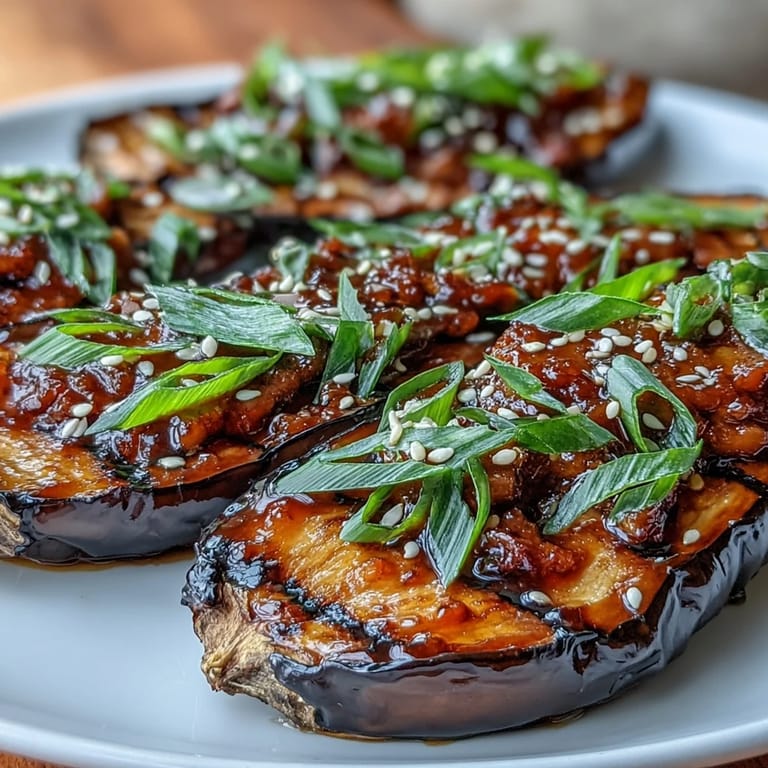
Save This recipe became my answer to the question I always get asked: what do you cook when you want something that feels special but doesn't require hours of work? Miso-glazed eggplant is it.
Recipe Questions & Answers
- → What type of eggplant works best?
Japanese eggplants are ideal because they have thinner skin, fewer seeds, and a naturally creamy texture when cooked. Regular globe eggplants can be substituted but may require slightly longer roasting time.
- → Can I make this gluten-free?
Yes. Use certified gluten-free miso paste and select gluten-free varieties of sake and mirin. Many traditional brands contain wheat, so always check labels carefully.
- → How do I prevent the glaze from burning under the broiler?
Watch closely during the final 2-3 minutes of broiling. The sugar in the glaze caramelizes quickly and can go from golden to burnt. Stay near the oven and remove as soon as bubbles appear and edges darken.
- → Can I prepare this in advance?
You can roast the eggplants ahead and store them refrigerated for up to 2 days. Apply the glaze just before serving and broil fresh for the best texture and flavor. Leftovers reheat well in a 350°F oven.
- → What can I serve with miso glazed eggplant?
It pairs beautifully with steamed short-grain rice, pickled vegetables, miso soup, or grilled fish. Also excellent alongside other Japanese favorites like tempura or in a bento box arrangement.
- → Is there a substitute for mirin?
You can use a mixture of 1 tablespoon sake plus 1 teaspoon sugar, or 1 tablespoon dry sherry plus a pinch of sugar. The flavor profile will shift slightly but still work well.