 Save
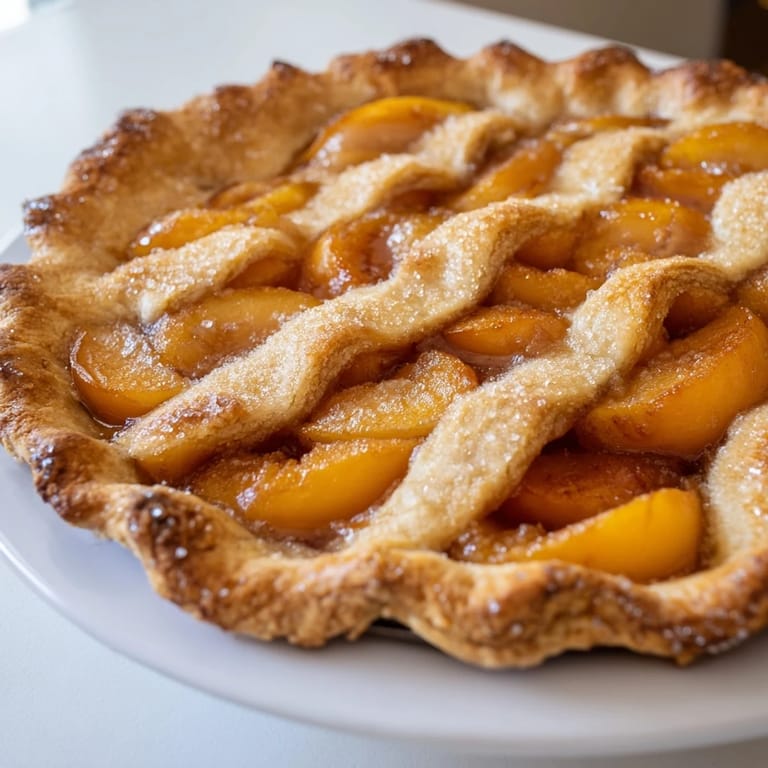
Save My neighbor knocked on the door one August afternoon with a bag overflowing with peaches from her tree, insisting I had to do something with them before they turned soft. I'd never made a pie crust from scratch before, but something about the urgency and those perfect peaches pushed me into the kitchen. That first pie emerged golden and fragrant, filling the house with the smell of cinnamon and buttery crust, and when my neighbor came back to check on me hours later, she stayed for three slices.
I learned that day that peach pie has a way of bringing people together without trying too hard. My kids started dropping by on weekends specifically hoping I'd made one, and suddenly I was the person who brought pies to potlucks instead of store-bought desserts.
Ingredients
- All-purpose flour (2 1/2 cups): The foundation of a tender, flaky crust. Cold flour actually matters here because it stays intact longer during baking rather than creating a tough, dense crumb.
- Unsalted butter (1 cup, cold and cubed): Keep this in the freezer until the last moment. Those little pockets of cold butter create steam during baking, which is what gives you all those beautiful layers.
- Salt (1 tsp): Enhances the butter flavor and brings out the natural sweetness of the peaches without anyone realizing what's doing the heavy lifting.
- Granulated sugar for crust (1 tbsp): Just enough to subtly sweeten the dough without making it dessert-level sugary.
- Ice water (6–8 tbsp): This is your control knob for dough texture. Add it slowly and stop as soon as the dough holds together when you squeeze a handful.
- Fresh peaches (6 cups, peeled and sliced): The soul of this pie. Pick ones that smell fragrant and yield slightly to gentle pressure. Underripe peaches are better than mushy ones since they hold their shape during baking.
- Granulated sugar for filling (3/4 cup): Draws moisture out of the peaches and caramelizes slightly as the pie bakes, deepening the flavor.
- Cornstarch (1/4 cup): Thickens the juices without creating a gel-like texture. It's the difference between a filling that sets nicely and one that pools at the bottom.
- Lemon juice (1 tbsp): A whisper of brightness that makes the peach flavor pop without tasting citrusy.
- Cinnamon and nutmeg (1/2 tsp and 1/4 tsp): Traditional spices that warm up the peach flavor. Freshly grated nutmeg makes a noticeable difference if you have it.
- Vanilla extract (1 tsp): Rounds out the filling with a subtle depth that people often can't quite identify but always notice when it's missing.
- Egg wash (1 beaten egg): Creates that glossy, golden-brown finish that signals a homemade pie.
- Coarse sugar for topping (optional): Adds a subtle crunch and sparkle that looks intentional.
Tired of Takeout? 🥡
Get 10 meals you can make faster than delivery arrives. Seriously.
One email. No spam. Unsubscribe anytime.
Instructions
- Make the crust dough:
- Whisk flour, sugar, and salt together in a large bowl, then scatter your cold butter cubes over the top. Using a pastry blender, two knives, or your fingertips, work the butter into the flour until the texture resembles coarse breadcrumbs with some pea-sized pieces of butter still visible. This is crucial because those little butter pockets become steam pockets when they melt.
- Bring the dough together:
- Sprinkle ice water over the mixture one tablespoon at a time, stirring gently with a fork until the dough just barely holds together when you squeeze a handful. You want it dry enough that it doesn't stick to your fingers, but wet enough that it doesn't crumble apart. If you add too much water, the crust becomes tough.
- Rest the dough:
- Divide the dough in half, shape each into a flat disc (this makes rolling easier later), wrap tightly in plastic wrap, and refrigerate for at least one hour. Overnight is even better because the gluten relaxes and the fat solidifies again, giving you maximum flakiness.
- Prepare the peach filling:
- In a separate bowl, toss your sliced peaches with sugar, cornstarch, lemon juice, cinnamon, nutmeg, salt, and vanilla. Let it sit for 10 minutes so the sugar starts drawing out the peach juices and the flavors can start getting to know each other.
- Preheat and roll:
- Set your oven to 400°F (200°C). On a lightly floured surface, roll out one dough disc into a circle about 1/8 inch thick and large enough to line your 9-inch pie dish with a little overhang. Transfer it carefully to the dish and trim the edges, leaving about an inch hanging over the side.
- Fill the pie:
- Pour the peach filling into the crust, mounding it slightly in the center. The filling will look juicy and loose, which is exactly what you want.
- Top and seal:
- Roll out the second dough disc and drape it over the filling. Trim the overhang to about an inch all around, then fold the edges under and crimp them with your fingers or a fork to seal. Cut several slits or create a lattice pattern on top so steam can escape during baking.
- Finish and bake:
- Brush the entire top crust with beaten egg for that signature sheen, then sprinkle with coarse sugar if you're using it. Bake for 50 minutes until the crust is deep golden brown and you can see the filling bubbling up through the slits. If the edges start browning too quickly, tent them loosely with foil.
- Cool properly:
- Set the baked pie on a wire rack and let it cool for at least 2 hours before cutting. This sounds like forever, but it's when the filling actually sets and thickens enough to slice neatly. Cutting too early results in a beautiful pie that pours all over your plate.
 Save
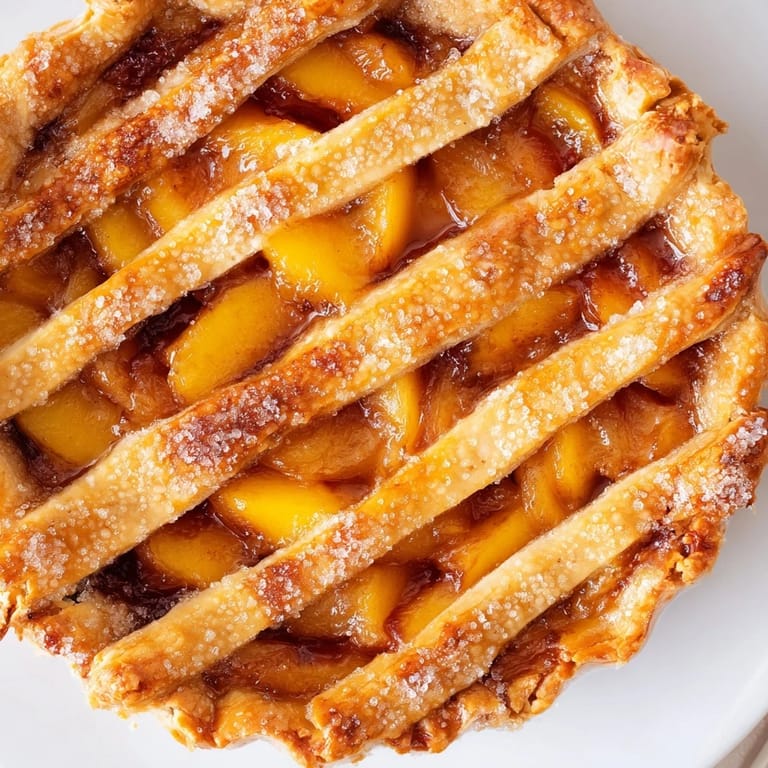
Save The moment that gets me every time is when someone closes their eyes after the first bite, that little pause where the flaky crust crumbles on their tongue and the warm peach filling hits. That's when I know it was worth the effort.
Why Fresh Peaches Matter
There's a two-week window in summer when peaches are truly perfect, and I've learned to watch the farmers market like a hawk during that time. A perfectly ripe peach should smell fragrant and give ever so slightly to pressure in your palm. If they're hard, they'll stay grainy and less sweet. If they're soft, they'll collapse into the filling and create a jam-like texture. The sweet spot is somewhere between the two, and it's always worth waiting for the right ones.
The Crust Secret Nobody Talks About
After my third pie, I realized that my failures were almost always about letting the dough warm up too much. The moment it becomes soft and sticky, you've lost that flaky texture you worked so hard to create. Keeping everything cold is like a secret handshake with the dough. I now use a marble slab for rolling and store my rolling pin in the freezer before starting.
Serving and Storage
Warm peach pie with cold vanilla ice cream is the perfect temperature contrast, but I've discovered that room temperature pie is somehow more forgiving and the peach flavor actually shines brighter. A wedge tastes just as good the next day, and honestly, cold pie straight from the fridge is its own kind of delicious.
- Store leftover pie covered with foil at room temperature for up to two days, or refrigerate for up to four days.
- You can freeze unbaked assembled pies for up to two months. Bake directly from frozen, adding five to ten minutes to the bake time.
- If you're short on time, quality store-bought pie crust works perfectly and nobody needs to know the difference.
 Save
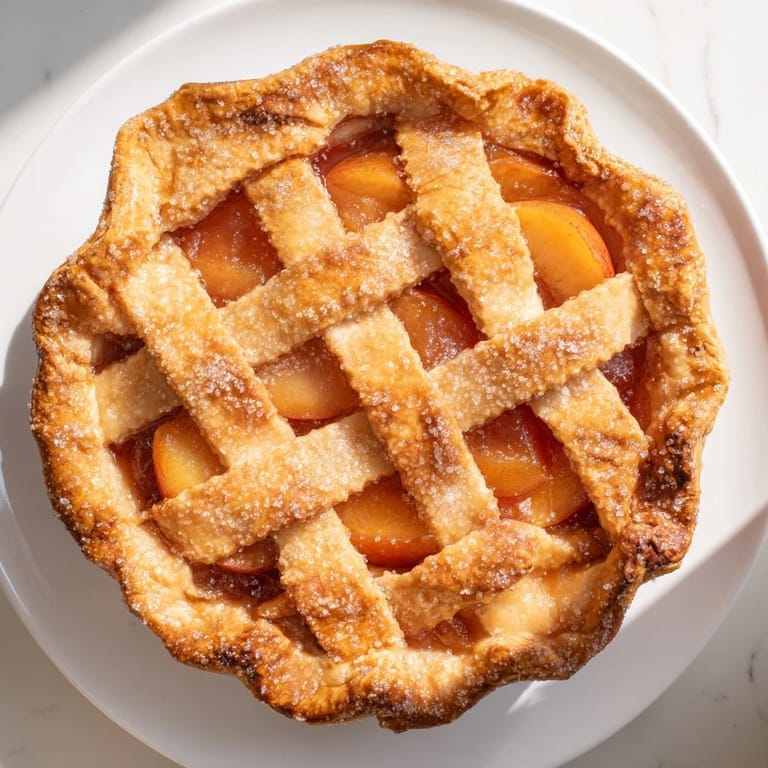
Save This pie reminds me that some of the best moments in cooking aren't about following rules perfectly but about sitting at a table with people who appreciate what you've made. Make this for someone you love.
Recipe Questions & Answers
- → How do I prevent the crust from becoming soggy?
Brush the crust with beaten egg and bake at a high temperature to ensure a crisp texture. Using cold butter and chilling the dough also helps.
- → Can I use frozen peaches instead of fresh?
Fresh peaches provide the best texture, but if using frozen, thaw and drain excess liquid to avoid a watery filling.
- → What spices complement the peaches best?
Cinnamon and a touch of nutmeg enhance the natural sweetness and add warmth without overpowering.
- → Is it necessary to chill the dough before baking?
Yes, chilling helps the crust hold its shape and creates a flaky, tender texture when baked.
- → How can I achieve a golden crust on top?
Brushing with beaten egg and sprinkling coarse sugar before baking promotes a shiny, golden finish with a slight crunch.