 Save
Save My kitchen smelled like a ramen shop the first time I simmered bone broth with fresh ginger and garlic, except I was standing in my apartment at 6 p.m. on a Tuesday, not in Tokyo. I'd bought shirataki noodles on a whim at the grocery store, intrigued by their mysterious translucent appearance and the promise of zero carbs. That night, I realized this simple bowl would become my go-to comfort meal, the kind that feels indulgent without any guilt attached.
I made this for my sister when she was visiting and trying the low-carb thing, and watching her slurp those noodles while steam rose off the bowl convinced me it wasn't just a diet meal. It became something we both looked forward to, a moment where healthy eating didn't feel like sacrifice. Now whenever she comes by, she asks if I'm making the noodle broth, and I always do.
Ingredients
- Bone Broth (4 cups): This is your foundation, so quality matters more than quantity. I learned this the hard way when I once used a thin, watery broth and the entire bowl felt empty despite the noodles. Look for brands with clean labels and a rich golden color, or make your own if you have time on a Sunday.
- Fresh Ginger (thumb-sized piece, sliced): Don't skip this or you'll miss the warming spice that makes the whole thing sing. Smacking it lightly with the side of your knife releases more oils and flavor into the broth.
- Garlic (2 cloves, smashed): Smashing rather than mincing gives you bigger pieces you can fish out later, which keeps the broth clear and lets you control the intensity of garlic flavor.
- Soy Sauce or Tamari (2 tablespoons): Tamari is your friend if anyone at your table has gluten sensitivities, and it tastes just as savory and deep.
- Rice Vinegar (1 tablespoon): This subtle acid brightens everything without making it taste sour, like finding the perfect balance on a tightrope.
- Sesame Oil (1 teaspoon): A small amount goes a long way here; this aromatic oil is what transforms a simple broth into something that smells like a proper Asian meal.
- Shirataki Noodles (400g, drained and rinsed): These deserve their own section because preparing them correctly changes everything. They come packed in liquid with a slight smell, so rinsing thoroughly under cold water then pouring boiling water over them removes any fishiness and makes them taste clean and neutral.
- Soft-Boiled Eggs (2, halved, optional): The yolk becomes a silky sauce when you break it into the hot broth, adding richness and protein in one move.
- Spring Onion, Red Chili, Fresh Herbs, Sesame Seeds (optional toppings): These are where you get to play and personalize your bowl; every person can build their own version at the table.
Tired of Takeout? 🥡
Get 10 meals you can make faster than delivery arrives. Seriously.
One email. No spam. Unsubscribe anytime.
Instructions
- Build Your Broth Foundation:
- Pour that bone broth into a medium pot and add your sliced ginger, smashed garlic, soy sauce, rice vinegar, and sesame oil all at once. Bringing everything together this way lets the flavors marry as they heat rather than feeling like separate additions.
- Simmer and Infuse:
- Bring the mixture to a gentle boil over medium heat, then reduce to a simmer for 10 minutes. You'll notice the aroma becoming deeper and more complex as it sits; this is the magic happening, so resist the urge to rush it.
- Prepare the Noodles:
- While the broth simmers, drain your shirataki noodles if they came in liquid, then rinse them thoroughly under cold running water. Place them in a sieve and pour boiling water over them, which removes any lingering odor and warms them slightly.
- Combine Noodles and Broth:
- Add the prepared noodles to the simmering broth and let them heat through for just 2 to 3 minutes. They don't need long since they're already cooked; you're just warming them and letting them absorb a bit of that rich flavor.
- Strain Out the Solids:
- Fish out the ginger slices and garlic cloves with a small spoon or ladle, leaving behind all that infused flavor. This step keeps your final bowl looking clean and prevents anyone from accidentally biting into a large piece of garlic.
- Serve in Bowls:
- Divide the noodles and broth evenly between two bowls, using a ladle to get equal amounts of that precious liquid. This is when the real customization happens.
- Top and Taste:
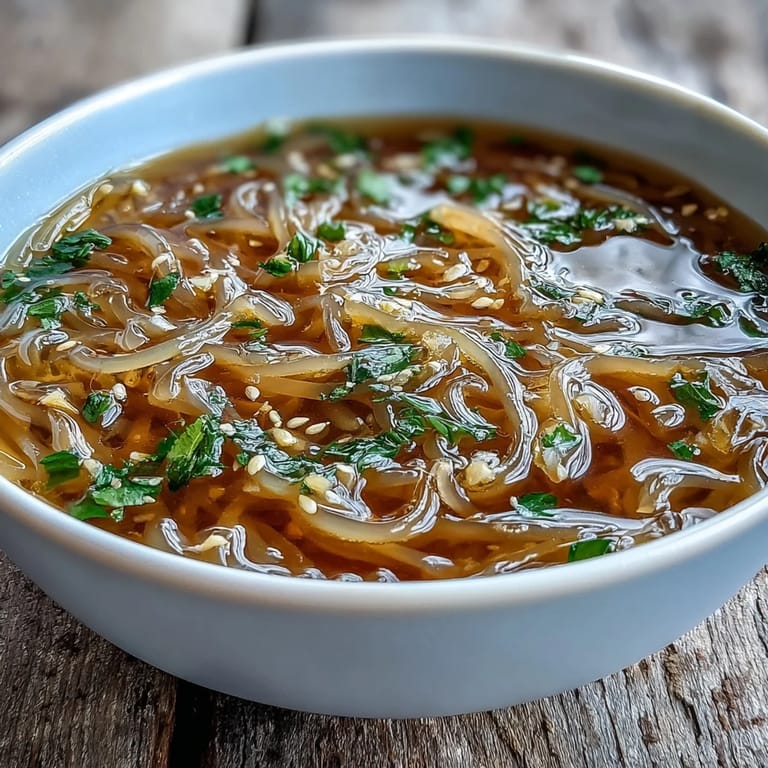
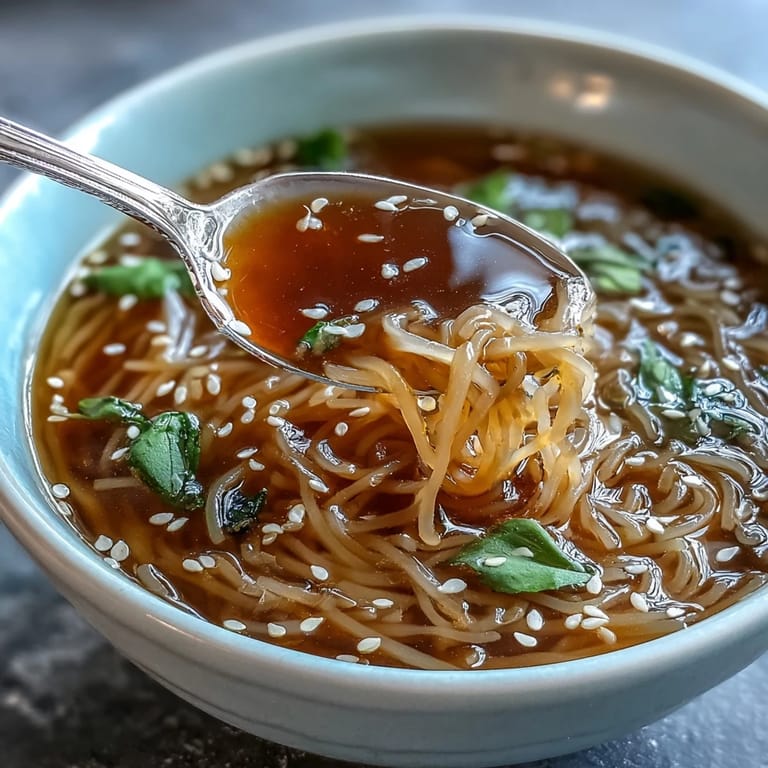
- Crown each bowl with whatever toppings you're using: halved soft-boiled eggs, thin slices of spring onion and red chili, fresh herbs, and a sprinkle of toasted sesame seeds. Give it a taste and adjust the seasoning with a splash more soy sauce or a pinch of salt if needed.
 Save
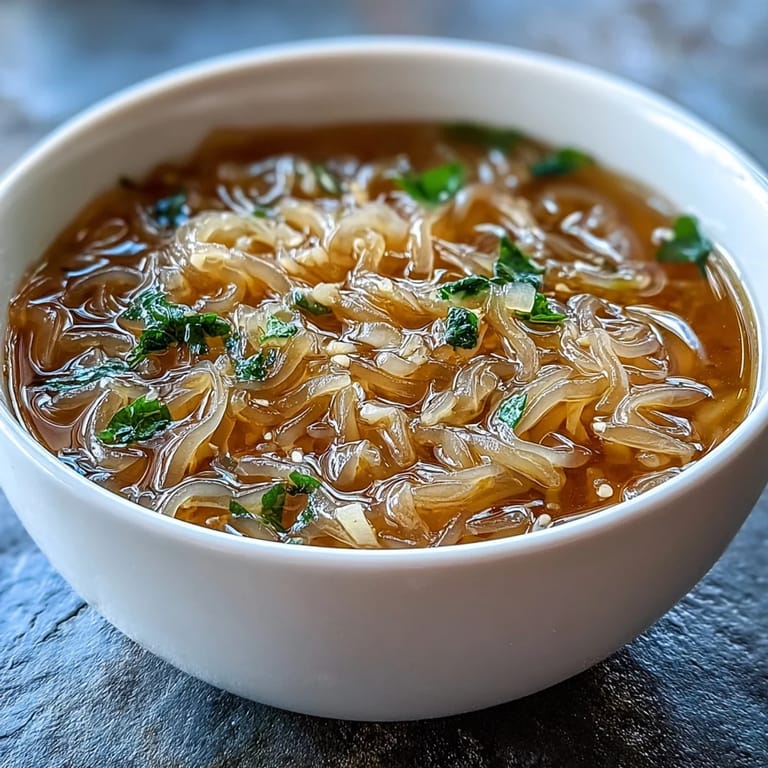
Save There's something almost meditative about watching steam rise from that bowl, the noodles suspended in golden broth with everything waiting to be discovered. My five-year-old nephew tried a spoonful once and asked why it tasted like a hug, and I realized this simple meal had somehow become more than just sustenance for me too.
The Secret to Shirataki Success
Shirataki noodles intimidated me at first because they looked so different from regular pasta, almost alien in their translucence. But once I realized they're essentially just konjac plant fiber shaped into noodles, I stopped being afraid and started appreciating what they actually are: a neutral vehicle for whatever broth or sauce you pair them with. The key is understanding that they won't taste like wheat noodles, and they shouldn't try to. Instead, they become delicate enough to let the broth be the star.
Why Bone Broth Belongs in Your Kitchen
I used to think bone broth was some trendy wellness thing until I tasted the difference it makes in a simple bowl of noodles. The depth and body it brings, the way it feels almost velvety on your tongue, comes from hours of simmering bones and connective tissue. Whether you make it yourself or buy it from a trusted brand, having it on hand transforms quick weeknight meals into something that feels nourishing on a cellular level.
Building Your Own Flavor
This recipe is a base, not a rulebook, and that's where the real joy lives. Every time I make it, I adjust based on what's in my crisper drawer or what I'm craving that day. Sometimes I add a handful of mushrooms, other times I throw in some bok choy in the last minute so it stays crisp. The structure is solid enough to hold up to experimentation, but the formula is forgiving enough that you can't really mess it up.
- If eggs aren't your thing, crumbled tofu or leftover shredded chicken work just as well for adding protein.
- Keep your heat at a gentle simmer rather than a rolling boil, which keeps the broth clear and the noodles from getting mushy.
- Taste before serving and trust your palate more than the recipe; your version is the right one if it makes you happy.
 Save
Save This bowl has become my refuge on cold evenings and my celebration on good days, proof that the simplest meals sometimes hold the most comfort. Make it once, and I promise you'll understand why I'm so fond of it.
Recipe Questions & Answers
- → Do shirataki noodles have any taste?
Shirataki noodles are virtually tasteless on their own, which makes them perfect for absorbing the flavors of your broth. They take on the savory, aromatic qualities of the ginger, garlic, and soy sauce in the bone broth, creating a harmonious dish.
- → Why rinse shirataki noodles with boiling water?
Rinsing with boiling water removes any natural aroma from the noodles and helps improve their texture. This quick step ensures they're clean and ready to absorb all the delicious flavors from your simmering broth.
- → Can I make this vegetarian?
Absolutely. Simply substitute the bone broth with a rich vegetable broth and skip the egg topping or replace it with tofu for protein. The ginger, garlic, and soy sauce work beautifully with vegetable bases.
- → How long does the broth need to simmer?
Simmer the broth for about 10 minutes after bringing it to a gentle boil. This allows the ginger, garlic, and seasonings to infuse properly, creating a deeply flavorful base for your noodles.
- → What proteins work well as toppings?
Soft-boiled eggs are traditional, but you can also add shredded cooked chicken, tofu slices, or even seared pork belly. These additions complement the Asian flavors and make the bowl more substantial.
- → Can I store leftovers?
The noodles will continue absorbing liquid, so it's best to store broth and noodles separately if possible. When reheating, add a splash more water or broth as needed. Consume within 2-3 days for best quality.