 Save
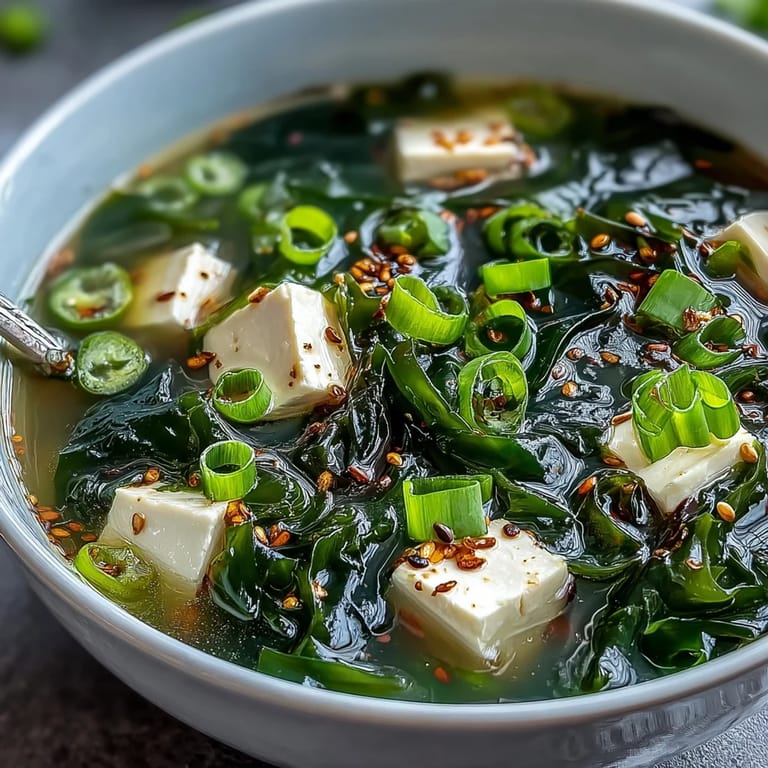
Save Experience the gentle warmth of a traditional Japanese Wakame Soup, a nourishing bowl rich in iodine and essential minerals. This delicate dish features tender wakame seaweed and silken tofu floating in a savory, umami-rich dashi broth, making it the perfect light appetizer or side dish for a balanced meal.
Save At just 65 calories per serving, this soup is as healthy as it is flavorful. By combining the natural depth of dashi with the probiotic benefits of white miso paste, you create a complex flavor profile that is both comforting and revitalizing.
Ingredients
Tired of Takeout? 🥡
Get 10 meals you can make faster than delivery arrives. Seriously.
One email. No spam. Unsubscribe anytime.
- 8 g dried wakame seaweed
- 4 cups (1 liter) dashi stock (use vegetarian dashi for vegetarian option)
- 100 g silken or firm tofu, cubed
- 2 scallions, thinly sliced
- 2 tbsp white miso paste
- 1 tsp soy sauce (gluten-free if needed)
- 1 tsp sesame oil (optional)
Instructions
- Step 1
- In a small bowl, soak the dried wakame in cold water for 5 minutes until rehydrated. Drain and set aside.
- Step 2
- In a medium saucepan, bring the dashi stock to a gentle simmer over medium heat.
- Step 3
- Add the cubed tofu and rehydrated wakame to the pot. Simmer for 2–3 minutes.
- Step 4
- In a separate bowl, blend the miso paste with a ladle of hot broth until smooth. Stir the mixture back into the soup.
- Step 5
- Add soy sauce and sesame oil (if using). Stir gently and heat for 1 more minute without boiling.
- Step 6
- Serve hot, garnished with sliced scallions.
Zusatztipps für die Zubereitung
To maintain the best flavor and nutritional value, avoid boiling the soup once the miso paste has been added. For a strictly vegan version, ensure your dashi is prepared using kombu and dried shiitake mushrooms rather than bonito flakes.
Varianten und Anpassungen
This soup serves as an excellent base for extra nutrition. Feel free to add sliced mushrooms, grated carrots, or fresh spinach during the simmering stage. If you prefer a heartier texture, firm tofu can be substituted for silken tofu.
Serviervorschläge
This recipe yields 4 servings and is best enjoyed hot. Pair it with a bowl of steamed rice or fresh sushi for a complete and traditional Japanese meal. Always check miso and soy sauce labels to ensure they are gluten-free if dietary restrictions apply.
 Save
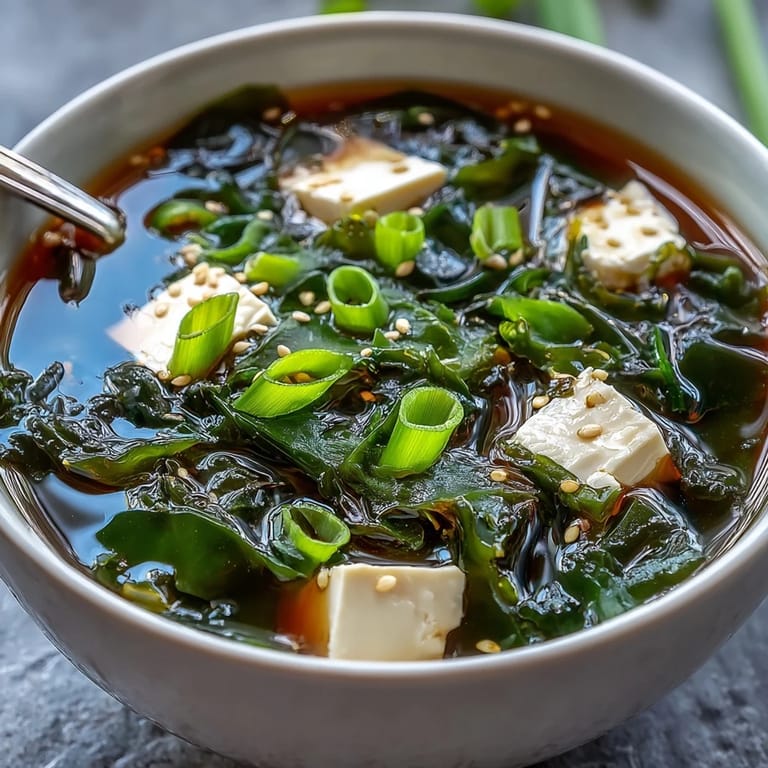
Save Bringing this authentic Japanese staple into your kitchen is a simple way to enjoy a healthy, umami-filled dish. With its mineral-rich ingredients and soothing broth, it is a testament to the beauty of simple, high-quality ingredients.
Recipe Questions & Answers
- → What is wakame seaweed?
Wakame is a nutritious Japanese seaweed rich in iodine, calcium, and minerals. It has a delicate flavor and tender texture when rehydrated, making it perfect for soups and salads.
- → Can I make this vegan?
Yes, simply use kombu and shiitake mushroom dashi instead of traditional fish-based dashi stock. Most miso pastes are naturally vegan, but always check the label to be sure.
- → Why shouldn't I boil the miso?
Boiling miso paste destroys its beneficial probiotics and can make the flavor bitter. Always dissolve miso in a separate bowl with hot broth first, then stir it into the soup at the end.
- → What can I add for more substance?
Sliced mushrooms, diced carrots, baby spinach, or cooked noodles like udon make excellent additions. You can also add shredded chicken or shrimp if you prefer a non-vegetarian version.
- → How long does dried wakame last?
Properly stored in an airtight container in a cool, dry place, dried wakame can last up to a year or more. Keep it away from moisture and direct sunlight to maintain quality.
- → Can I use other types of seaweed?
While wakame is traditional, you can substitute with kombu (kelp) or nori sheets cut into strips. Note that different seaweeds have varying textures and rehydration times.