 Save
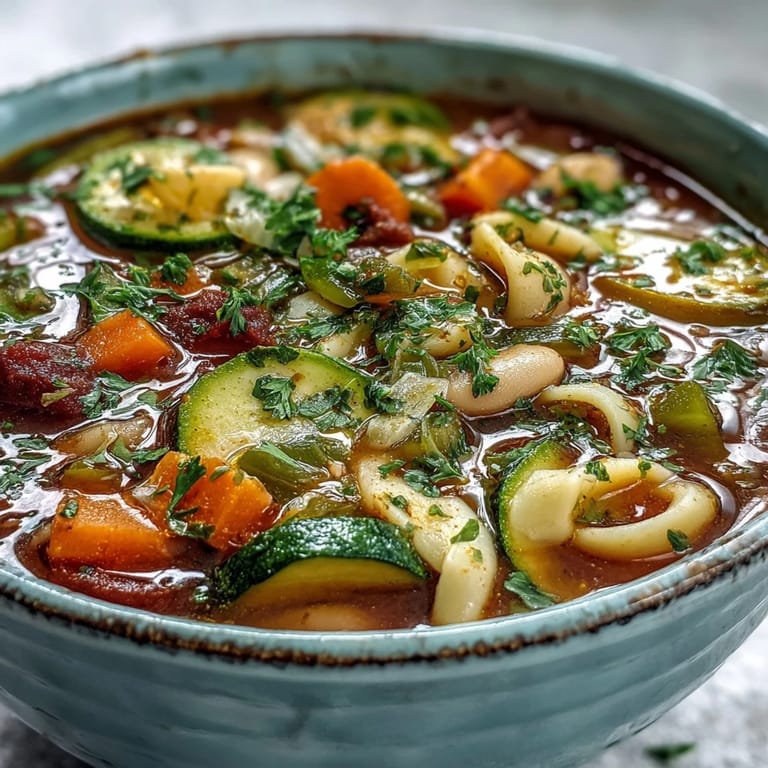
Save I remember the sound of the rain hitting my kitchen window when I first mastered this soup. It was one of those days where the fridge looked empty but the pantry held secrets. Minestrone is less of a recipe and more of a conversation with the seasons. I started with just a few limp carrots and ended up with a bowl of pure comfort. Now it is my go to whenever the air gets a little crisp.
One Tuesday evening I accidentally added way too much garlic and realized it actually made the whole house smell like a rustic Italian villa. My friends arrived cold and tired but their faces lit up the moment I handed them a steaming bowl. We sat on the floor and talked until the pot was scraped clean. It taught me that a big pot of soup is the ultimate way to welcome people in.
Ingredients
- 2 tbsp olive oil: Use a high quality oil because it carries the flavor of the aromatics.
- 1 medium onion diced: This provides the essential sweetness that grounds the entire pot.
- 2 carrots diced: Carrots add a lovely color and a subtle earthy crunch.
- 2 celery stalks diced: Celery offers a salty depth that defines traditional Italian bases.
- 1 small zucchini or butternut squash diced: Choosing between these depends on whether you want summer lightness or winter warmth.
- 1 cup green beans or chopped kale: These greens provide a beautiful contrast in texture and bite.
- 3 cloves garlic minced: Fresh garlic creates a fragrant foundation that fills the kitchen.
- 1 can diced tomatoes: The acidity from the tomatoes cuts through the richness of the broth.
- 1 medium potato diced: This optional addition makes the soup incredibly hearty.
- 1.5 liters vegetable broth: Using a flavorful broth ensures every spoonful is satisfying.
- 1 can cannellini or borlotti beans: These beans bring a creamy protein packed element to the dish.
- 100 g small pasta: Tiny shapes like ditalini are perfect for catching the savory liquid.
- Salt and pepper: Seasoning is the key to bringing all these disparate vegetables together.
- 1 bay leaf: This herb adds a subtle woody aroma that develops as it simmers.
- 1 tsp dried oregano and basil: Rubbing these in your palms releases their trapped aromatic oils.
- 2 tbsp chopped fresh parsley: Fresh herbs at the end provide a necessary pop of brightness.
- Grated Parmesan cheese: A sprinkle of cheese adds a salty and nutty finish to each bowl.
Tired of Takeout? 🥡
Get 10 meals you can make faster than delivery arrives. Seriously.
One email. No spam. Unsubscribe anytime.
Instructions
- The Aromatic Base:
- Saute your onion carrots and celery in olive oil until they soften and smell sweet. This base forms the flavor foundation for everything else you add.
- Building the Layers:
- Stir in the garlic and your choice of seasonal squash or green beans. Cook for a few minutes to let the heat wake up their natural juices.
- The Gentle Simmer:
- Pour in the tomatoes and broth then let the flavors mingle over a low heat for fifteen minutes. This time allows the vegetables to become perfectly tender and the broth to deepen.
- Adding Heart:
- Drop in the beans and pasta letting them cook until the noodles are just right. Keep an eye on the pot as the pasta absorbs the liquid to ensure it stays soupy.
- Final Flourish:
- Season with your herbs and stir in the fresh parsley before serving. Remove the bay leaf so no one finds a crunchy surprise in their bowl.
 Save
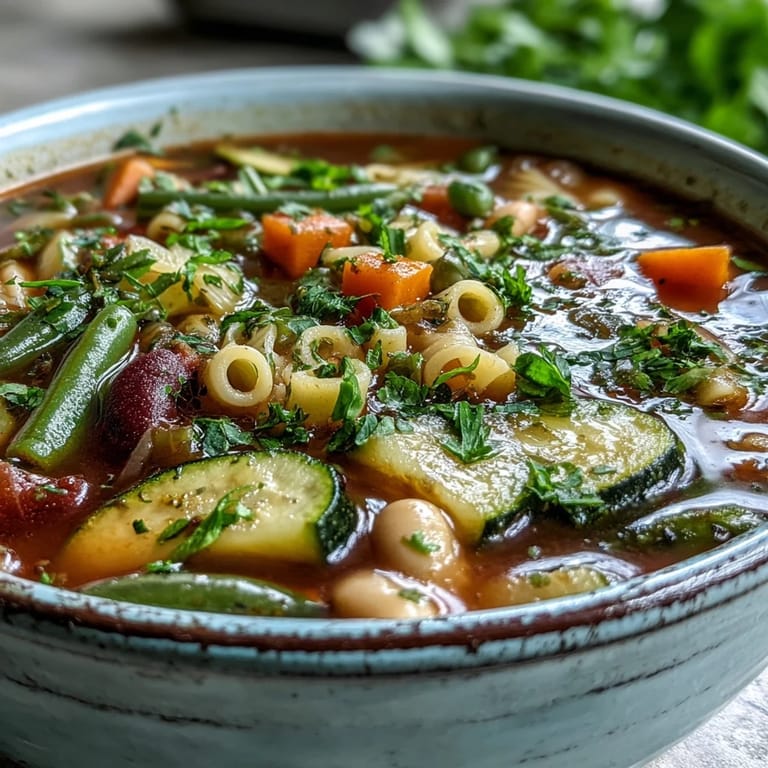
Save There was a specific Saturday when the steam from this pot fogged up my glasses and I just felt completely at peace. It was the first time I realized that cooking for myself could be just as rewarding as cooking for a crowd.
Seasonal Swaps
I have learned that this soup changes its personality depending on what the market offers. In the spring I love adding fresh peas and leeks for a delicate green profile. When winter hits I lean heavily into dark leafy kales and starchy potatoes to make it more filling. It is a recipe that grows and breathes with the year.
The Art of the Broth
Achieving the perfect consistency is all about watching the liquid levels as the pasta cooks. If you find the soup is getting too thick a splash of water or extra broth fixes it instantly. I always taste the broth three times before serving to make sure the salt level is just right. A well seasoned broth is the difference between a good soup and a great one.
Making It Your Own
You do not have to follow the ingredient list like a law book. I often toss in the ends of a cabbage or a handful of frozen spinach if I have them. It is all about building layers of flavor that satisfy your specific cravings.
- Keep a stash of Parmesan rinds in the freezer for soup nights.
- Always serve with a crusty piece of bread to soak up the bottom of the bowl.
- A tiny squeeze of lemon juice right before serving can brighten the whole pot.
 Save
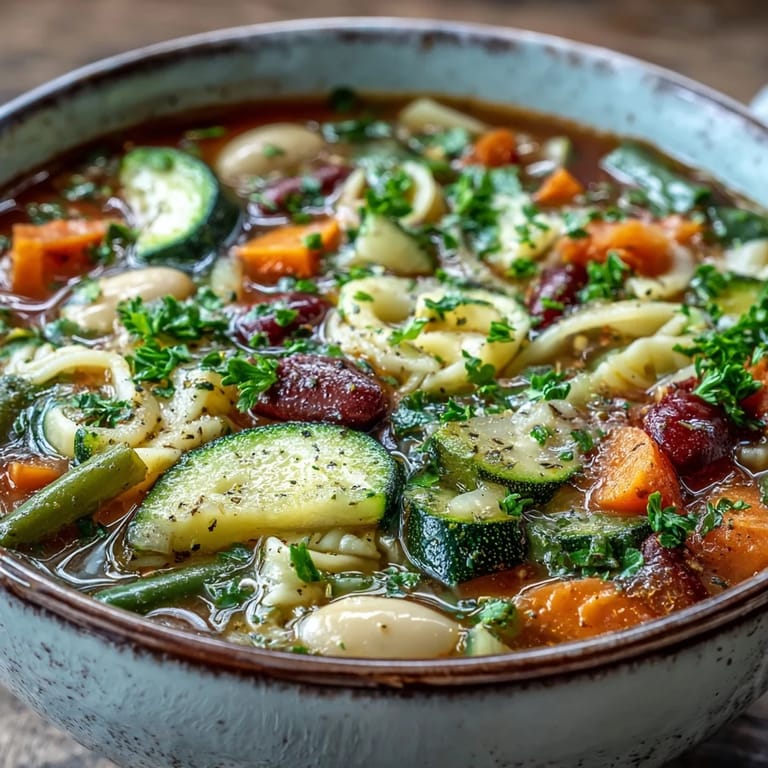
Save I hope this pot of soup brings as much warmth to your kitchen as it has to mine over the years. Happy cooking and enjoy every spoonful.
Recipe Questions & Answers
- → What vegetables work best in minestrone?
Onions, carrots, celery, zucchini, green beans, and potatoes create the classic combination. For winter versions, swap zucchini for butternut squash and green beans for kale or spinach. Spring additions might include fresh peas, leeks, or tender cabbage.
- → Can I make this soup gluten-free?
Absolutely. Simply substitute regular pasta with your favorite gluten-free pasta shape. Ditalini, elbow macaroni, or small shells all work wonderfully. The rest of the ingredients are naturally gluten-free.
- → How do I prevent the pasta from becoming mushy?
Add the pasta during the last 10-12 minutes of cooking and simmer uncovered. This ensures the pasta cooks through but maintains a pleasant texture. If planning to freeze leftovers, you might slightly undercook the pasta.
- → Can I use dried beans instead of canned?
Yes, though you'll need to adjust the cooking time. Soak dried beans overnight, then cook them separately until tender before adding to the soup. This method takes longer but yields excellent results.
- → What's the secret to deeper flavor?
Add a Parmesan cheese rind to the broth while simmering—it imparts incredible umami depth. Remember to remove it before serving. A final drizzle of extra virgin olive oil and fresh parsley also brightens the flavors beautifully.
- → How long does this soup keep in the refrigerator?
Store cooled minestrone in an airtight container for up to 4 days. The flavors often improve after a day or two. Note that the pasta will continue softening, so you might add a splash of broth when reheating.