 Save
Save I spent an entire afternoon last October watching the rain slap against the kitchen window while the scent of roasting squash filled every corner of my apartment. There is something profoundly grounding about the way acorn squash yields its sweetness when it meets a hot oven. I used to find peeling squash intimidating until I realized roasting them in their skins is the ultimate kitchen shortcut. This soup has become my go to whenever I need a bowl of liquid gold to ward off a chill. It is a humble recipe that transforms a few bumpy vegetables into something elegant.
One evening after a particularly long hike I was too tired for a complex meal but craved something soul warming. I found two lone acorn squash in the pantry and decided to roast them while I took a hot shower. By the time I was back in the kitchen the house smelled like a cozy cabin in the woods. Blending the soup felt like a rhythmic meditation as the vibrant orange color began to swirl in the pot. Sharing that first bowl with my partner in near silence was the highlight of our week.
Ingredients
- Acorn squash: Roasting these whole or halved allows the sugars to caramelize in a way that boiling simply cannot replicate.
- Yellow onion: Sautéing these until they are just translucent provides a structural sweetness that supports the squash.
- Fresh garlic: Two cloves might seem modest but they provide a sharp counterpoint to the warm spices.
- Carrot: Adding a single carrot deepens the orange hue and adds a subtle earthy layer to the flavor profile.
- Vegetable broth: This acts as the canvas for your soup so choose one that tastes good enough to sip on its own.
- Heavy cream: Swirling this in at the end provides a luxurious mouthfeel that makes every spoonful feel special.
- Nutmeg and cinnamon: These aromatic spices are the secret to that nostalgic autumn flavor that reminds everyone of the holidays.
- Olive oil: Quality oil helps the squash skin release easily and gives the sautéed vegetables a rich base.
Tired of Takeout? 🥡
Get 10 meals you can make faster than delivery arrives. Seriously.
One email. No spam. Unsubscribe anytime.
Instructions
- Roast the squash:
- Preheat your oven to 400 degrees and place the oiled squash halves face down on parchment. You will know they are ready when the skins look slightly wrinkled and the flesh gives way easily to a fork.
- Prepare the base:
- Sauté your onion and carrot in a large pot until they are soft and fragrant. Adding the garlic last prevents it from burning and turning bitter.
- Combine and simmer:
- Scoop the tender squash into the pot with the broth and spices. Let everything bubble together gently so the various flavors can introduce themselves to one another.
- Puree to perfection:
- Use an immersion blender directly in the pot to create a smooth and velvety consistency. If you use a countertop blender remember to leave a vent for the steam to escape.
- The final finish:
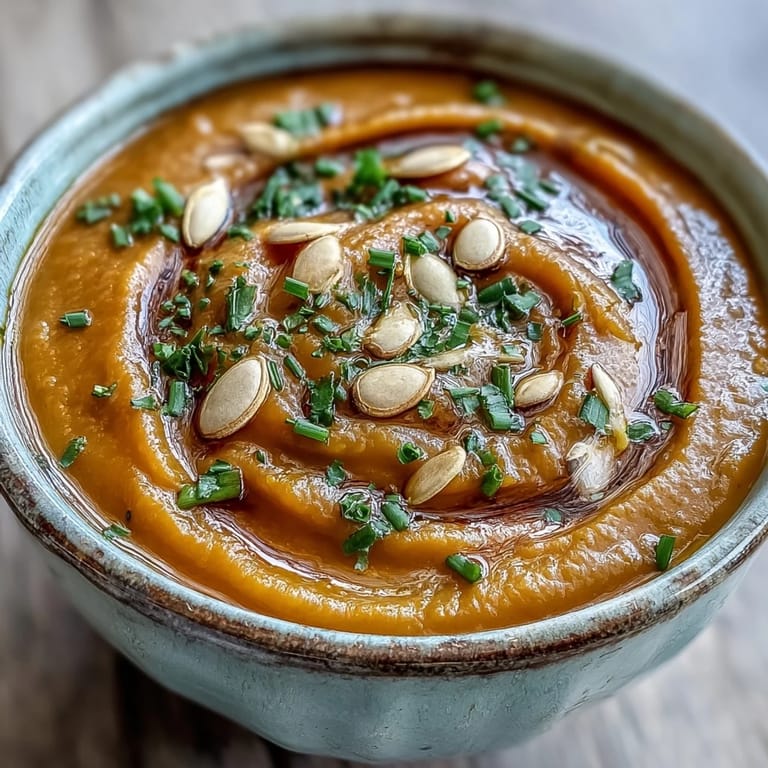
- Stir in your cream or coconut milk and give it a quick taste for salt. Ladle the soup into bowls and garnish with seeds or herbs for a beautiful presentation.
 Save
Save My niece once helped me make this and insisted on adding the cinnamon because she thought we were making pumpkin pie. When she finally tasted the finished soup she looked surprised and declared it her new favorite liquid hug.
The Art of the Garnish
A bowl of soup can look a bit plain without a little bit of texture on top. I love the crunch of toasted pumpkin seeds against the creaminess of the squash. A simple drizzle of cream or a few chopped chives can make a Tuesday night dinner feel like a restaurant experience.
Choosing the Best Squash
When you are at the market look for squash that feels heavy for its size and has a matte skin. A large orange patch on the bottom is a good sign that it ripened fully in the sun. Avoid any with soft spots or deep cracks in the outer shell.
Storage and Reheating
This soup actually tastes even better the next day after the spices have had time to fully develop. I often make a double batch specifically so I can freeze half for busy weeknights. Just remember to reheat it slowly on the stove to maintain that beautiful smooth texture.
- Store leftovers in an airtight glass container to keep the flavor fresh.
- Add a splash of broth when reheating if the soup has thickened too much in the fridge.
- Avoid boiling the soup once the cream is added to prevent any separation.
 Save
Save This soup is a testament to how simple ingredients can create something truly extraordinary. I hope it brings as much warmth to your table as it does to mine.
Recipe Questions & Answers
- → Can I make this soup ahead of time?
Absolutely. This soup actually develops deeper flavors when made ahead. Store in the refrigerator for up to 4 days and reheat gently on the stovetop, adding a splash of broth or cream if needed.
- → What's the best way to achieve the smoothest texture?
An immersion blender works perfectly right in the pot. For an ultra-silky finish, use a high-speed countertop blender and strain through a fine-mesh sieve. The roasted squash flesh blends easily into creamy perfection.
- → Can I freeze this soup?
Yes, freeze before adding the cream. Cool completely, transfer to freezer-safe containers, and store up to 3 months. Thaw overnight in the refrigerator, reheat, then stir in fresh cream before serving.
- → What can I substitute for heavy cream?
Full-fat coconut milk creates a velvety dairy-free version with subtle tropical notes. For a lighter option, use half-and-half or Greek yogurt stirred in off the heat to prevent curdling.
- → How do I adjust the seasoning balance?
Taste after blending and before adding cream. The roasted squash brings natural sweetness, so start with less nutmeg and cinnamon. Add salt gradually and finish with white pepper for a clean, bright flavor.