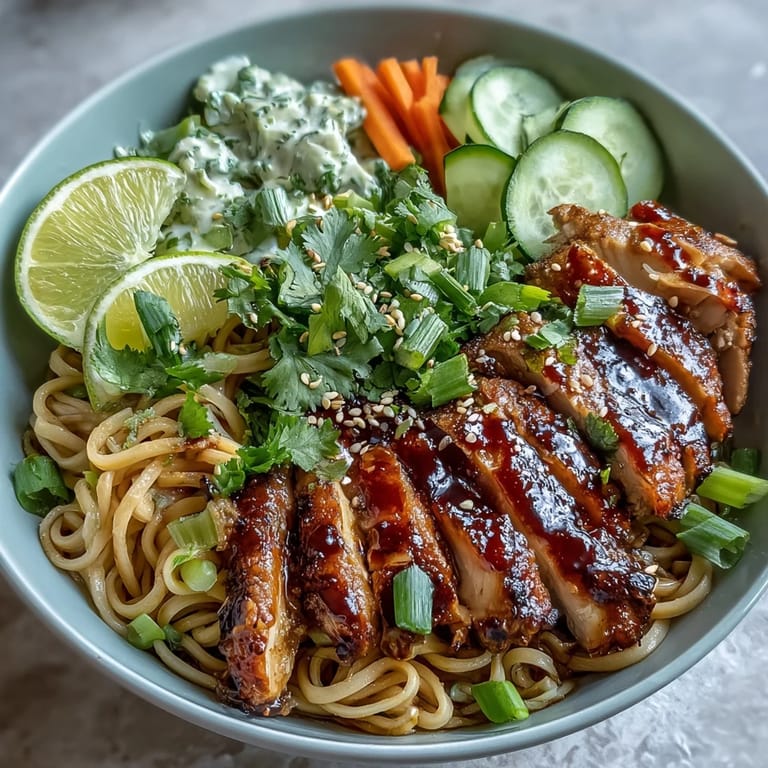
 Save
Save There's something almost meditative about assembling a noodle bowl—the way you can taste the dish before it even comes together. My first attempt at this was on a rushed weeknight when I had thirty minutes and a craving for something bright and satisfying, not the heavy takeout I usually defaulted to. The kitchen filled with the aroma of toasted sesame oil and garlic as I worked, and suddenly those tired evening blues lifted. Now this bowl feels like a small ritual, something I make when I need both comfort and energy in the same bite.
I made this for a friend who'd been stuck in a cooking rut, convinced everything she touched turned bland. Watching her eyes light up when she tasted that first forkful of noodles coated in the glossy sauce reminded me why food matters—it's not just about filling your stomach, it's about small moments of genuine pleasure shared with people you care about.
Ingredients
- Boneless, skinless chicken breast or thighs (500 g), thinly sliced: Thighs stay more forgiving if you're not obsessive about timing, though breasts cook slightly faster—choose what matches your mood and your freezer.
- Tamari or low-sodium soy sauce (3 tbsp): The umami foundation that makes everything taste intentional rather than accidental.
- Fish sauce (1 tbsp): Yes, it smells funky straight from the bottle, but trust me—it dissolves into the sauce and adds a savory depth you can't replicate.
- Rice vinegar (2 tbsp): This is your brightness, the note that keeps the sauce from feeling heavy or one-dimensional.
- Honey (1 ½ tbsp): A whisper of sweetness that balances the saltiness and makes the whole thing feel rounded.
- Toasted sesame oil (2 tbsp): Never skip the toasted version—the roasted depth is irreplaceable.
- Neutral oil (2 tbsp): Canola or sunflower works perfectly; this keeps the chicken from sticking and adds cooking medium.
- Garlic, minced (3 cloves) and ginger, freshly grated (1 tsp): Ginger is optional but worth keeping on hand once you taste how it brightens everything.
- Chili flakes or Sriracha (1 tsp, optional): Add this if you like your bowls with a gentle warmth that builds slowly.
- Dried rice noodles or wheat noodles (250 g): Rice noodles have a lighter feel; wheat holds up better if you're meal prepping.
- Fresh vegetables—carrot, cucumber, bell pepper, spring onions, bean sprouts, cilantro: These are your textural contrast and the reason each bowl feels vibrant; slice them as thin or chunky as you prefer.
- Toasted sesame seeds and lime wedges: The sesame brings a nutty finish, lime juice adds one final spark of life to each bite.
Tired of Takeout? 🥡
Get 10 meals you can make faster than delivery arrives. Seriously.
One email. No spam. Unsubscribe anytime.
Instructions
- Make your sauce foundation:
- Whisk together tamari, fish sauce, rice vinegar, honey, sesame oil, neutral oil, minced garlic, and ginger in a bowl until the honey dissolves completely. Divide it in half—one portion becomes your marinade, the other your finishing sauce. This two-pronged approach means the chicken gets flavor from the inside while the bowl gets a fresh layer on top.
- Get the chicken ready:
- Pour one half of your sauce over the thinly sliced chicken and let it sit for fifteen minutes while you prep everything else. The acid in the vinegar and the oil work together to tenderize the meat gently.
- Cook your noodles:
- Follow the package instructions for your noodles—most dried rice noodles need just a few minutes in boiling water. Drain them, rinse under cold water until they're completely cool, and set them aside. Cold noodles prevent the final bowl from becoming warm mush.
- Sear the chicken with confidence:
- Get a large skillet or wok very hot over medium-high heat, then add the marinated chicken and let it cook undisturbed for a few minutes so it develops color and flavor. This takes five to seven minutes total—you're looking for cooked-through chicken with lightly golden edges, not charred.
- Arrange your bowl:
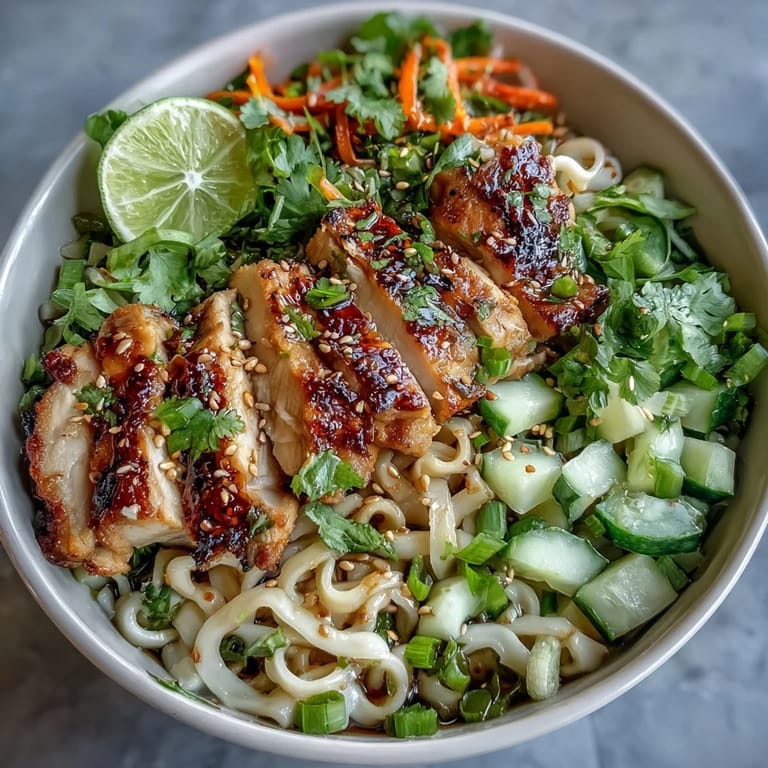
- Start with noodles as your base, then arrange the chicken, carrot, cucumber, bell pepper, bean sprouts, and spring onions in sections around the bowl. This isn't just for looks—it means every spoonful can contain a bit of everything.
- Finish with flair:
- Drizzle your reserved sauce over the bowl, scatter cilantro and toasted sesame seeds on top, squeeze lime juice over everything, and taste as you go. This is your moment to adjust—add more lime if it needs brightness, more sauce if it feels dry, more chili flakes if you want heat.
 Save
Save This dish taught me that Asian cooking isn't about following precise measurements with robotics—it's about understanding balance and having the confidence to taste and adjust. A squeeze of lime that changes everything, a pinch more chili flakes for someone with a bolder palate, these small tweaks are where the real skill lives.
The Magic of Mise en Place
The reason this bowl comes together so quickly is because the actual cooking time is maybe ten minutes—everything else is prep and assembly. I learned this the hard way by trying to julienne carrots while chicken was already in the pan, then scrambling and burning something. Now I dice and slice everything before any heat touches a pan, which transforms the whole experience from stressful to almost meditative.
Customizing Your Bowl
This recipe is genuinely flexible without losing its identity. I've made it with tofu for vegetarian friends by omitting the fish sauce and adding an extra half teaspoon of soy sauce instead. I've thrown in snap peas, shredded cabbage, edamame, whatever vegetables needed using before they wilted in the crisper drawer. The structure of the bowl—protein, noodles, sauce, fresh vegetables—remains solid no matter what you fill it with.
Building Flavor Layers
What makes this sauce so compelling is that it's not one note—it's a conversation between salty, sweet, tangy, and nutty all happening at once. The sesame oil adds this toasty undertone that keeps you interested, while the fish sauce provides a savory base that doesn't taste fishy if you trust the process. Every ingredient pulls its weight, and nothing feels superfluous.
- Toast your sesame seeds in a dry pan for thirty seconds right before serving—this amplifies their nutty flavor exponentially.
- If you're meal prepping, keep the sauce separate and only toss it with the noodles and protein right before eating to prevent sogginess.
- A squeeze of lime is non-negotiable; it's the final note that makes everything feel fresh and intentional rather than heavy.
 Save
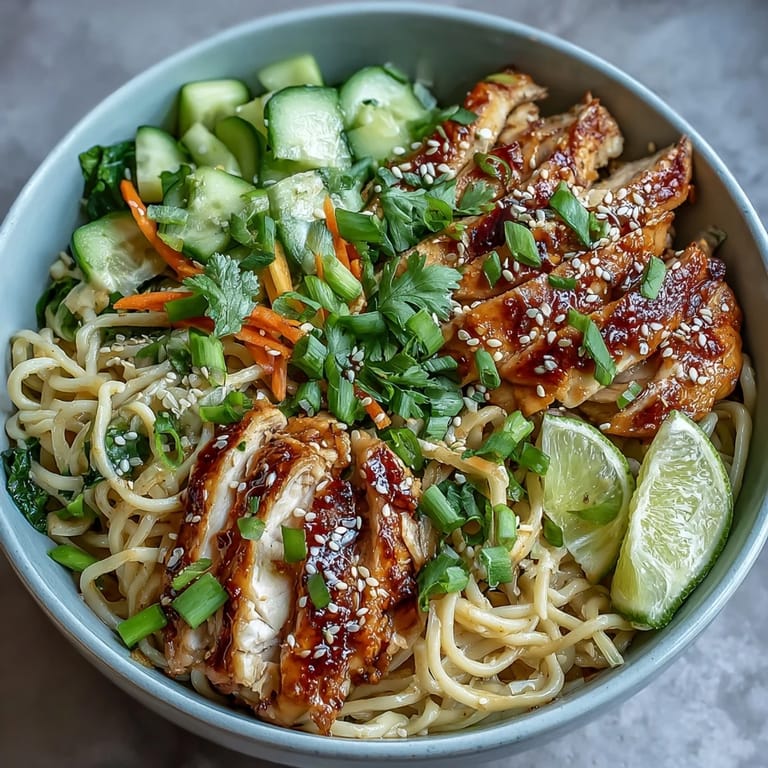
Save This noodle bowl has become my answer to 'what should I make when I want something that feels special but doesn't demand hours in the kitchen.' It's become the thing I reach for when I need to feed myself well on a weeknight, and somehow it never feels like settling.
Recipe Questions & Answers
- → What type of chicken works best?
Boneless, skinless chicken breast or thighs, thinly sliced, provide tender and flavorful results.
- → Can I use other noodles?
Yes, rice noodles are traditional but wheat or egg noodles also work well.
- → How is the marinade prepared?
Combining tamari, fish sauce, rice vinegar, honey, sesame oil, garlic, and ginger creates a balanced savory-sweet marinade.
- → What are good vegetable substitutes?
Snap peas, edamame, or shredded cabbage add extra crunch and freshness if preferred.
- → Is this dish gluten-free?
Using gluten-free tamari and certified gluten-free noodles ensures a gluten-free meal.
- → How to add heat to the dish?
Optional chili flakes or Sriracha can be included for a mild to medium spicy kick.